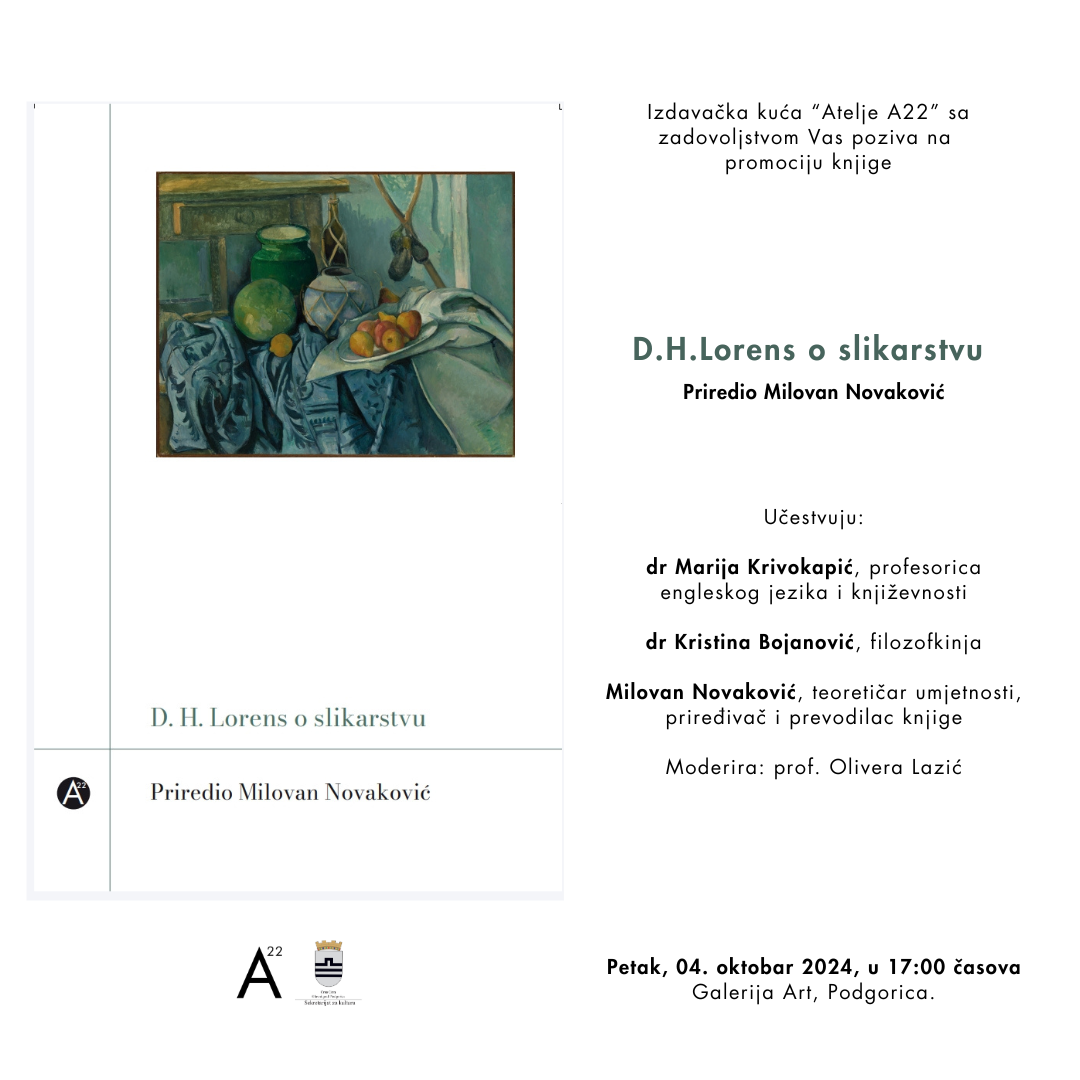
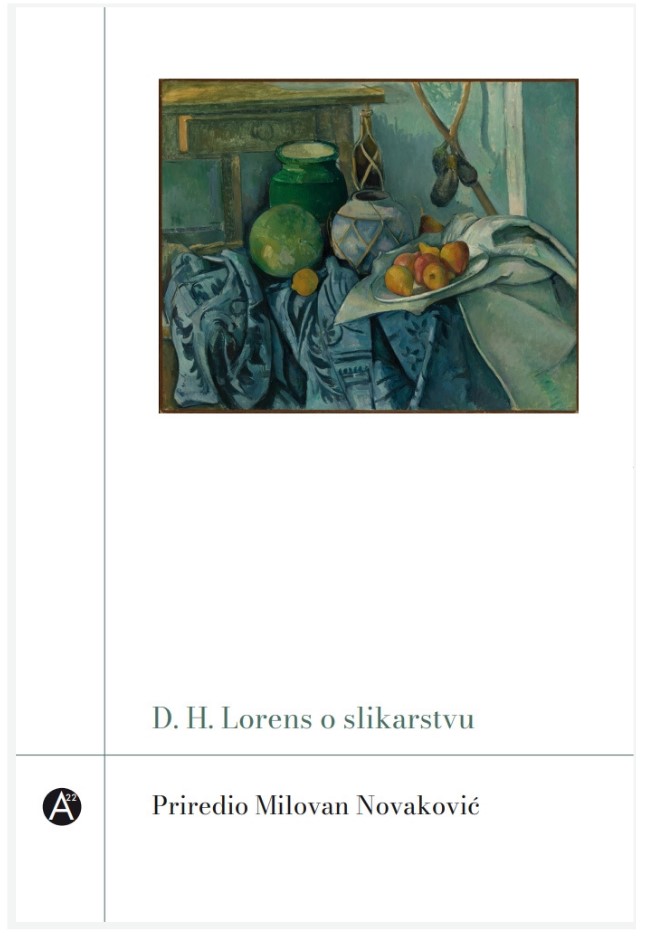
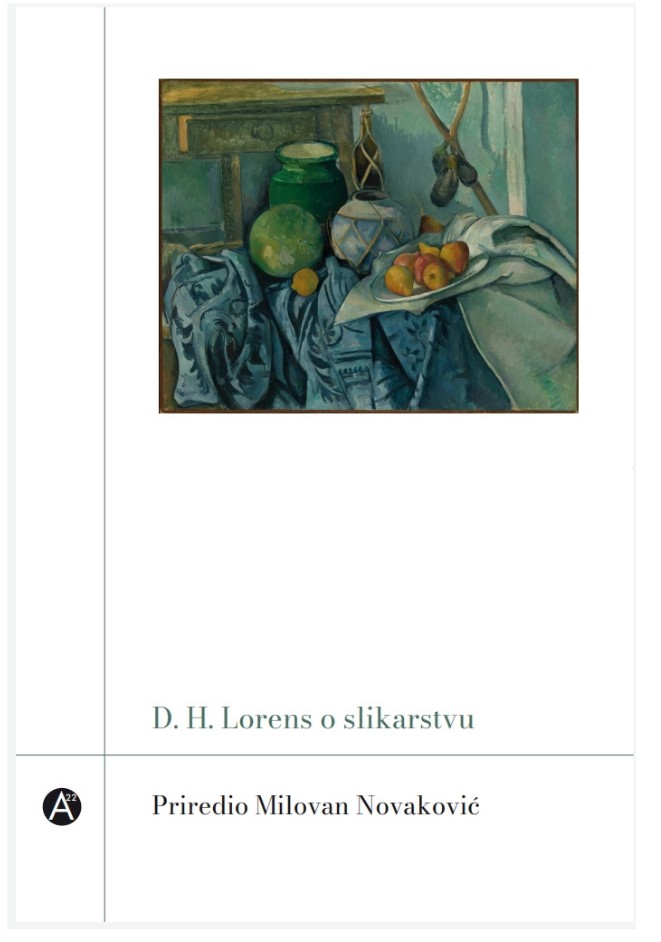
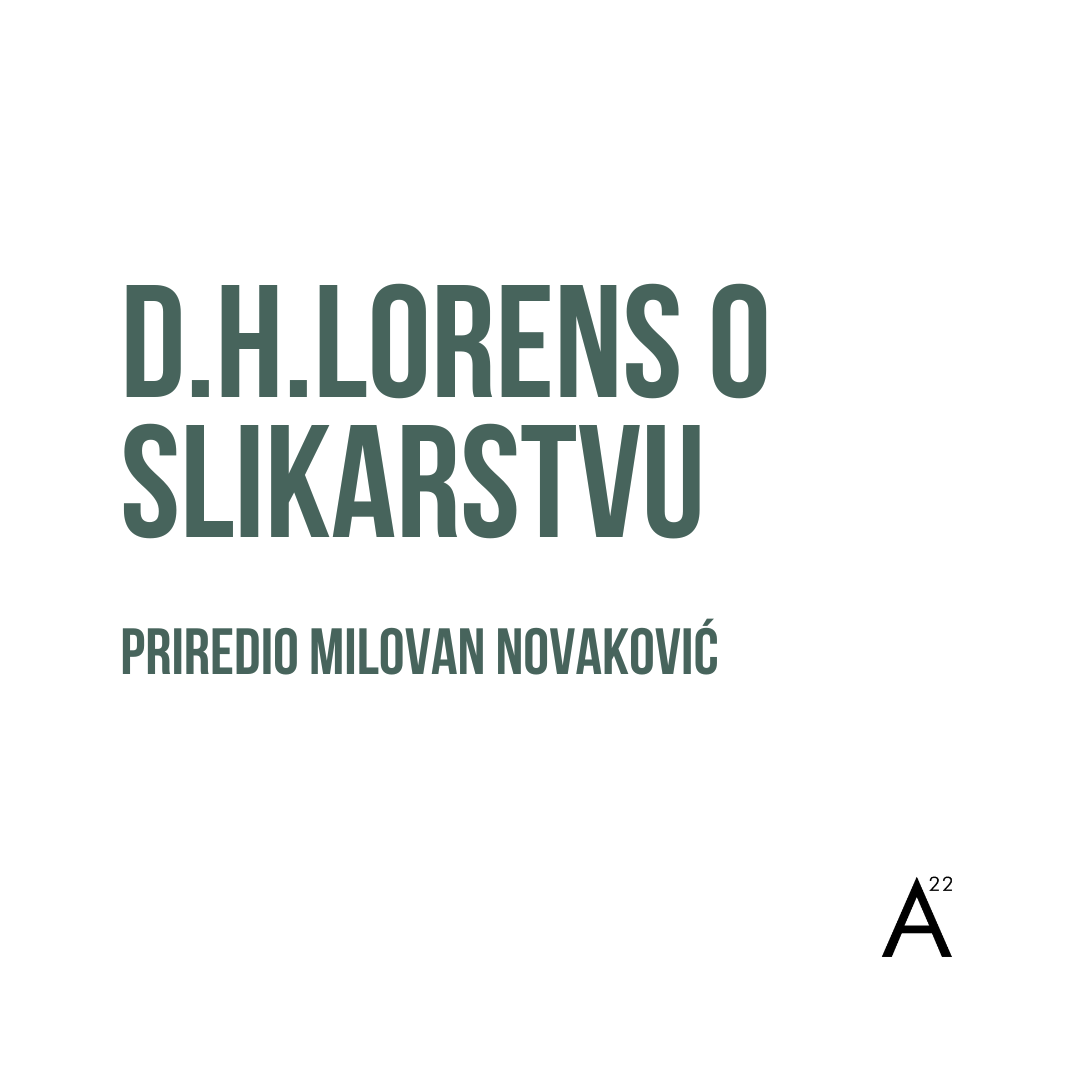
Publishing House Atelje A22 is pleased to inform the public that it has published the book “D. H. Lawrence on Painting,” edited and translated by art theorist Milovan Novaković.
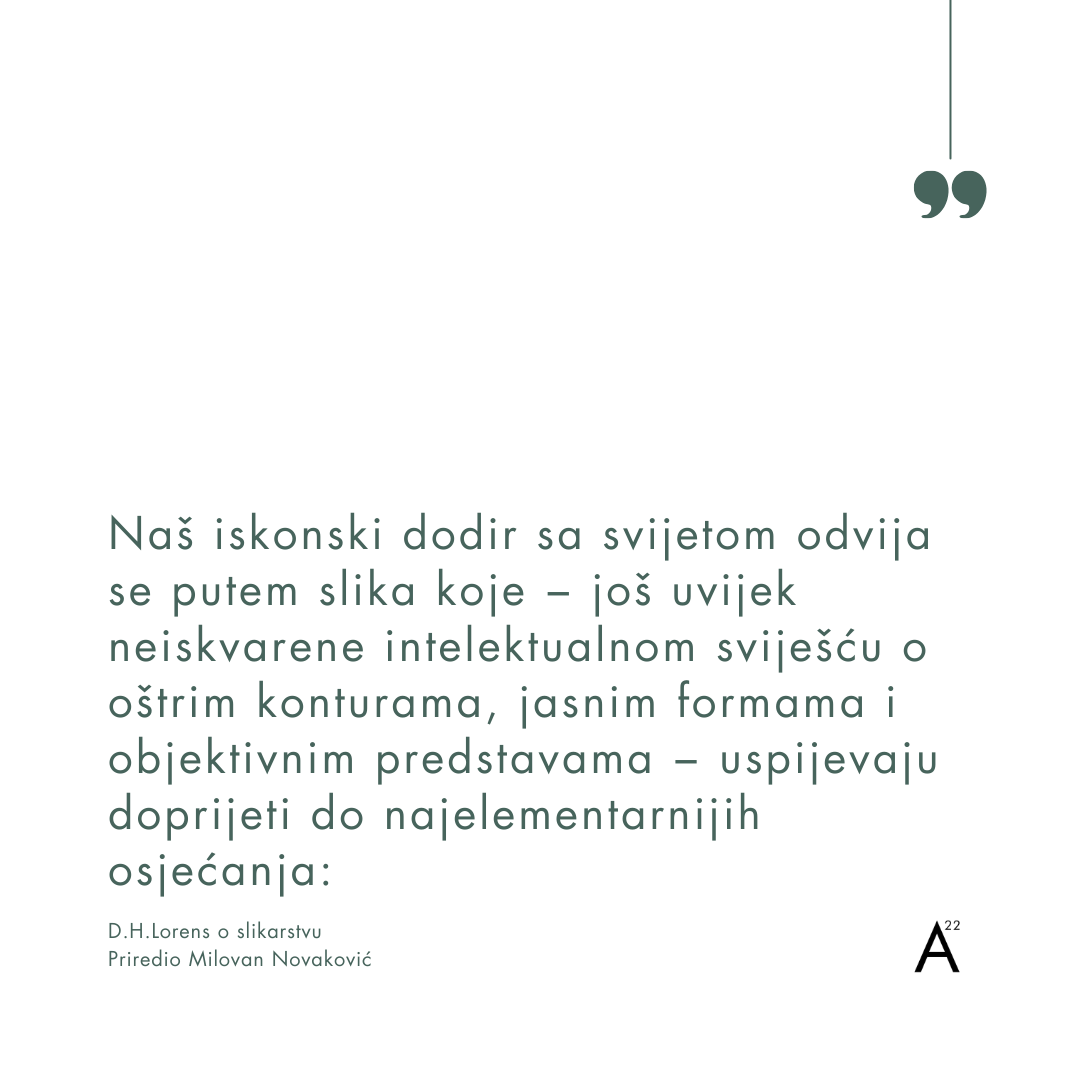
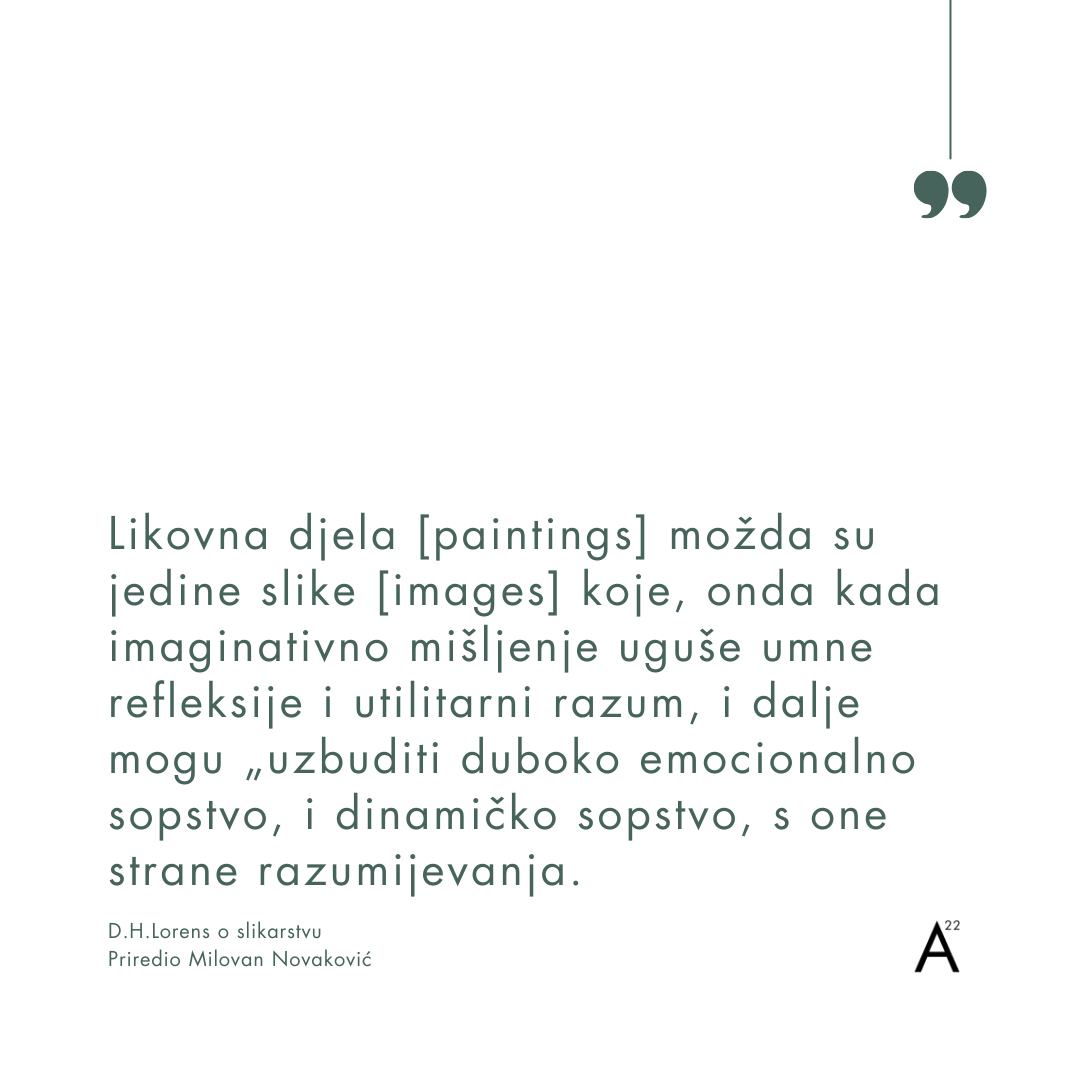
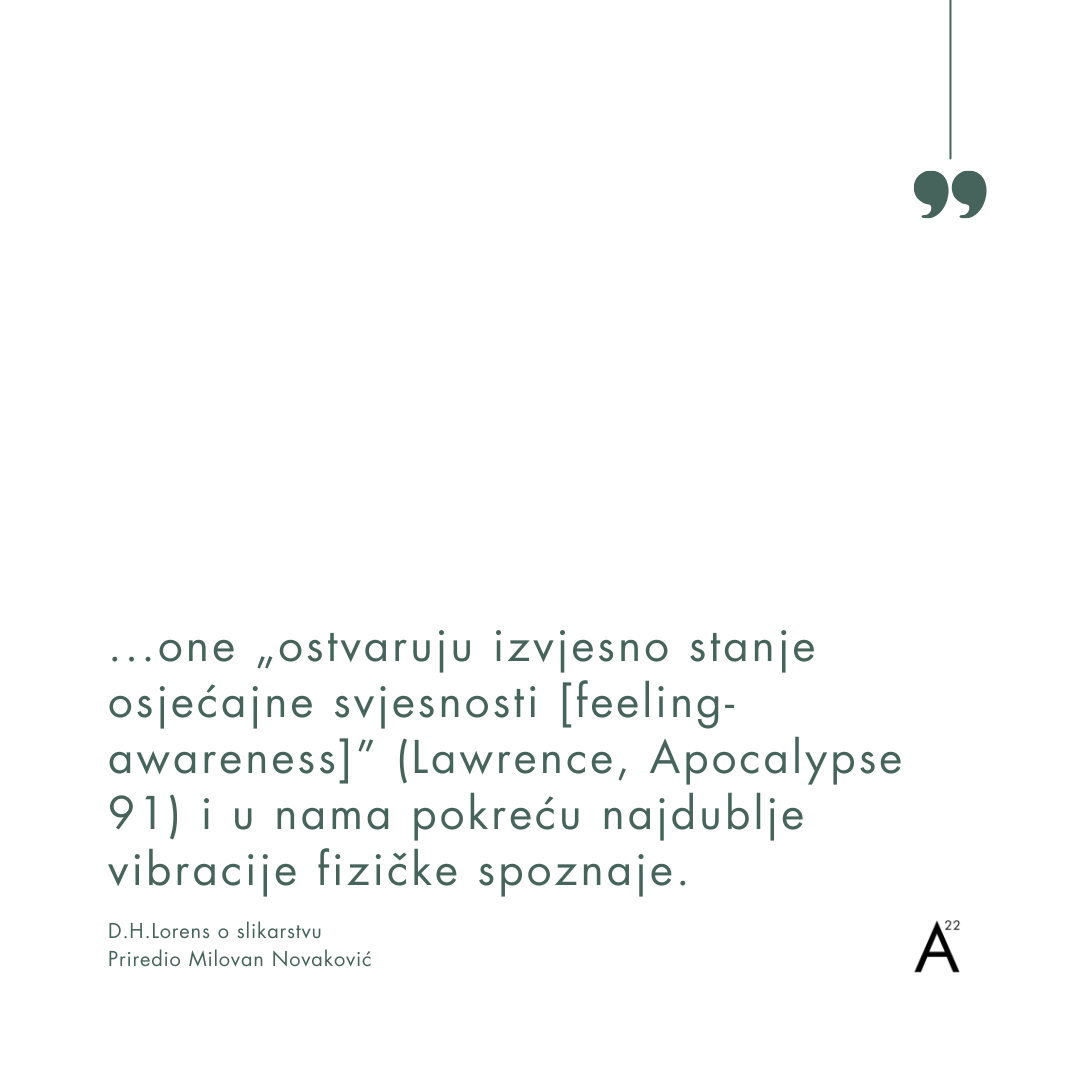
This book is a foundational study that explores and analyzes key aspects of the reflections on painting by one of the most important writers of the twentieth century, D. H. Lawrence. David Herbert Lawrence is recognized not only as a literary classic, an accomplished novelist, poet, and essayist, but also as a profound connoisseur and interpreter of art. His essays on painting had a significant impact throughout the twentieth century and continue to engage the imagination of writers on art to this day.
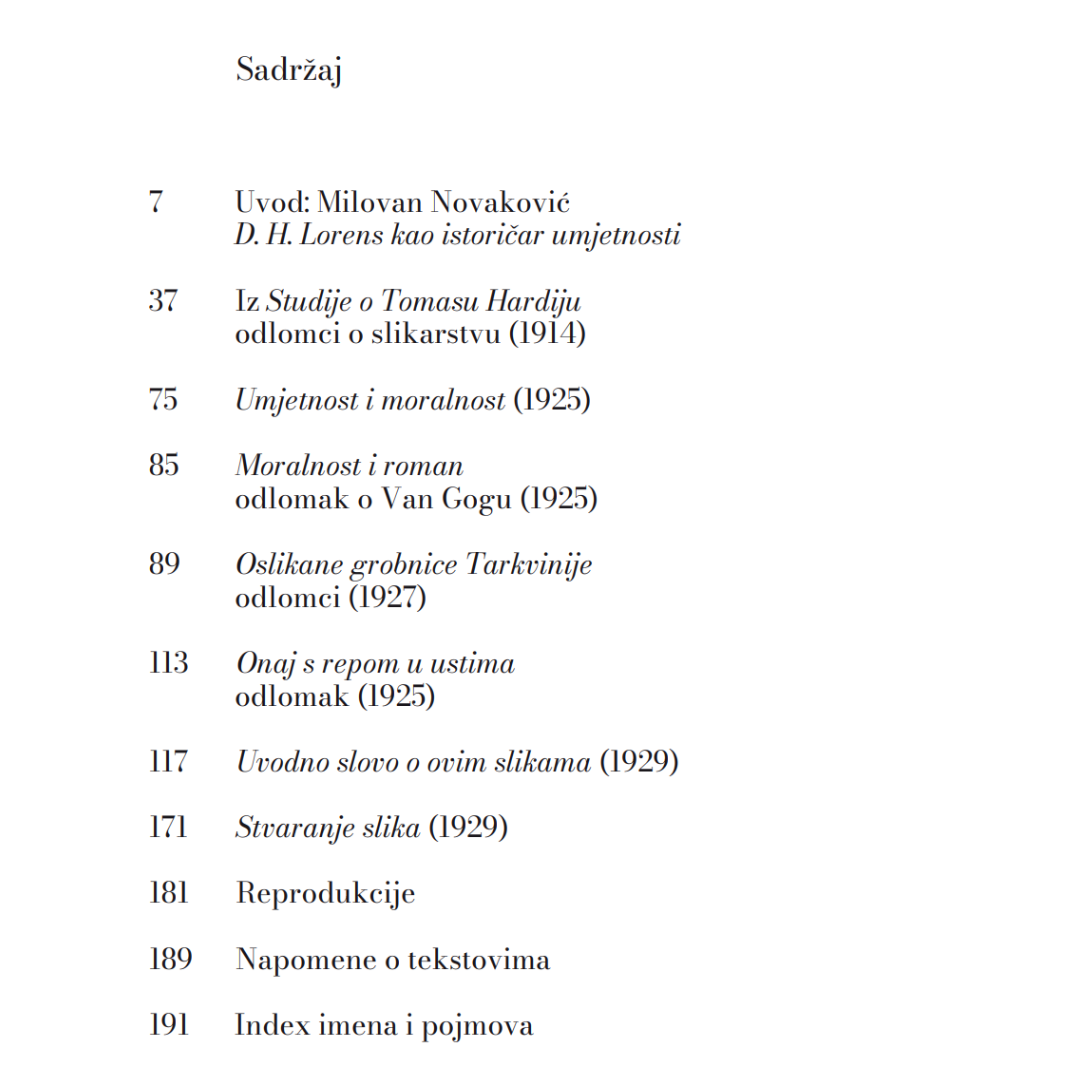
The volume offers a deep insight into Lawrence’s passion for painting, while providing valuable analyses of art and artworks as expressions of the human spirit. In the introductory study, the editor places Lawrence’s reflections on painting and art within the broader context of his literary oeuvre, as well as within the history of art at the turn of the nineteenth to the twentieth century, emphasizing the writer’s profound connection with the visual arts.
By bringing together, for the first time in our language, Lawrence’s most important writings and excerpts on painting, this publication is significant not only for its academic value—both in the fields of painting and literature—but also for its contribution to a broader understanding of art. The publishing house Atelje A22 emphasizes that, in this form and scope, Lawrence’s essays on painting have not appeared in any other language, including the author’s original English, which makes this book all the more noteworthy.
Relying on a comprehensive analysis of Lawrence’s works, particularly his essays on art, the editor and translator Milovan Novaković reveals the key motifs, concepts, and ideas that the author emphasized in his interpretation of artistic creation. Special attention is given to Lawrence’s approach to artworks through the prism of his general philosophical thought, grounded in a polaristic ontology, exploring contrasts between the physical and the spiritual, light and darkness, and other similar oppositions that shaped his understanding of artworks, historical epochs, and creators.
As noted by one of the reviewers of this edition, Prof. Dr. Marija Krivokapić:
“From the edition before us, we learn that attentive listening to the immediate moment of the present—whose essence differs from systematized experience—requires liberation from habits that confine us to what has been tested, known, and seen, and especially from the stable visual metaphor that equates all that exists with what we see. […] Only a thorough connoisseur of Lawrence’s work, as well as his life, can adequately translate his passionate and unwavering thought. […] From the essays selected by Milovan Novaković, we learn not only about Lawrence’s view of painting—from visual formation in the old world to that of his own time—but also about his general worldview, discovering keys for interpreting important linguistic and visual choices in his fiction. Given that Lawrence’s essays on painting have never before been collected, even in English, I consider this edition an exceptionally valuable contribution to regional and global scholarship on modern English literature, English studies in general, and art theory.”
The publication of this book was supported by the Secretariat for Culture of the Capital City Podgorica.
 />
/> />
/> />
/> />
/> />
/> />
/> />
/>