La Biennale di Venezia 2024 — Stranieri Ovunque: Foreigners Everywhere
Reviewed as a condition rather than an exhibition
Milica Janković, Editor in Chief
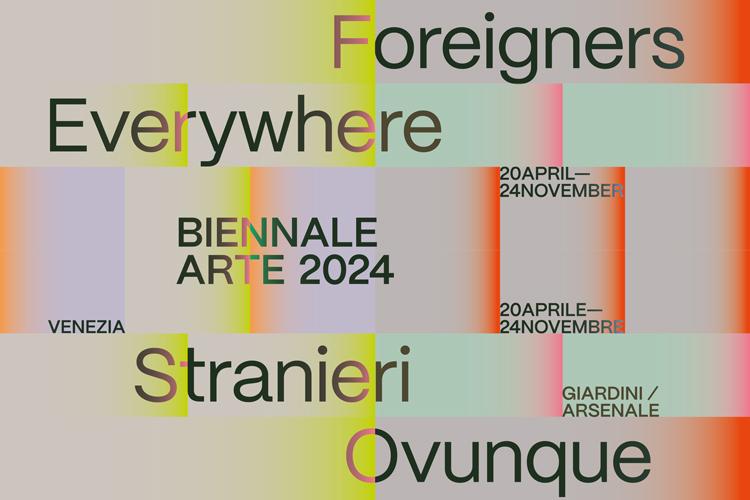
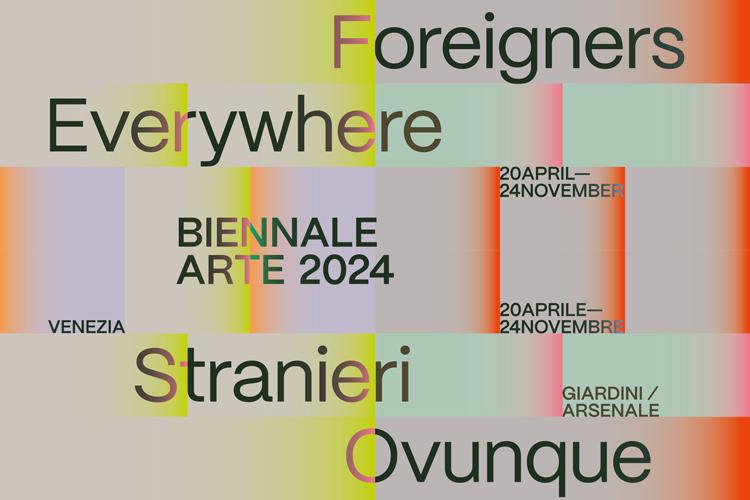
Curated by Adriano Pedrosa, the 60th Venice Biennale1 does not present itself as a thematic survey so much as an epistemological shift. Stranieri Ovunque – Foreigners Everywhere operates less as a title than as an operative condition: a declaration that foreignness is no longer peripheral to modernity, but one of its defining structures.
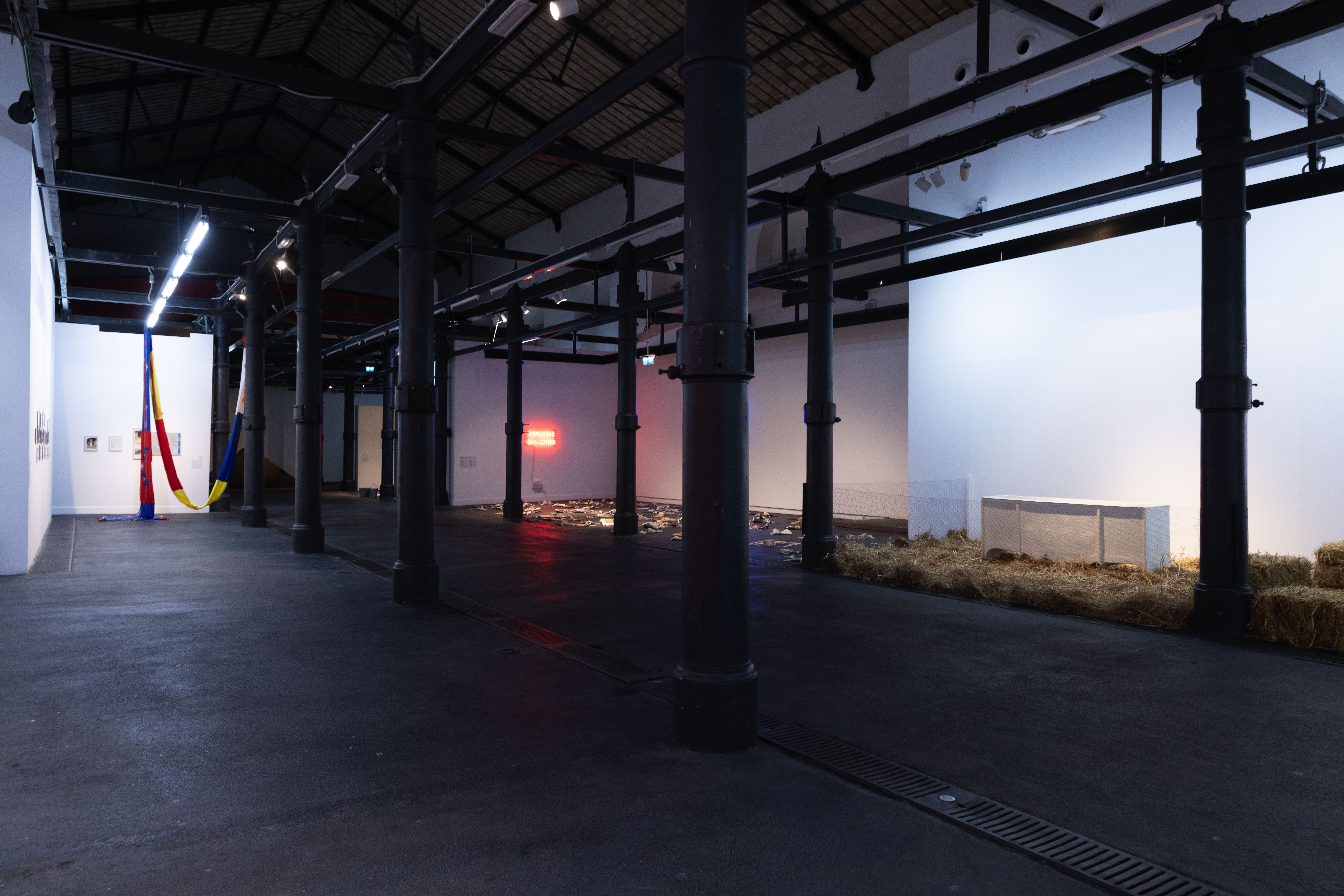
Across the Arsenale and Giardini, the exhibition refuses linear narration. Instead, it constructs a dispersed field of artistic positions in which geography, identity, and authorship are constantly destabilized. The result is not coherence but adjacency — works placed beside one another in ways that generate friction rather than synthesis.
Pedrosa’s curatorial emphasis is explicit: artists historically positioned outside the Western canon are not inserted as correctives, but allowed to define the center itself. This gesture is neither purely symbolic nor purely institutional; it is aesthetic in its consequences. The Biennale becomes a space where the categories of “center” and “margin” are continuously folded into one another.
Within this structure, the presence of Anna Boghiguian is particularly resonant. Her sprawling, hand-drawn constellations of text and image resist the archival authority of history while simultaneously invoking it. Trade routes, colonial economies, and maritime trajectories appear not as fixed narratives but as unstable circuits of movement and extraction. Her work situates drawing as a form of historical thinking that refuses closure.
Elsewhere, the exhibition opens onto a quieter, more interior register in the work of Huguette Caland. Her abstracted bodies and sensual topographies destabilize the boundary between intimacy and displacement. In the context of Pedrosa’s framework, Caland’s practice reads less as autobiographical expression than as a cartography of belonging that never resolves into territory. The body becomes both site and exile.
A different kind of structural dissolution appears in the legacy of Lygia Clark, whose participatory propositions are positioned here as foundational rather than historical. Clark’s reconfiguration of the artwork as relational experience — activated through touch, proximity, and bodily awareness — continues to unsettle the autonomy of the object. In Venice, her presence operates as a reminder that dematerialisation in art was never only conceptual, but also deeply embodied.
What emerges across these positions is a consistent refusal of fixed identity. “Foreignness,” in Pedrosa’s framing, is not an identity category but a relational condition produced by movement, exclusion, translation, and survival. The Biennale’s structure mirrors this instability. Rather than guiding the viewer through a coherent argument, it disperses attention across temporalities and geographies that do not resolve into a single narrative line.
This refusal of synthesis is one of the exhibition’s most deliberate gestures. The Arsenale, often read as a space of monumental display, is instead treated as a sequence of interruptions. Works appear as if temporarily stabilized within a larger field of displacement. The Giardini, traditionally associated with national representation, is subtly re-coded: not abolished, but softened, its borders rendered porous through curatorial juxtaposition.
Yet the Biennale’s most compelling tension lies in its institutional position. While it foregrounds practices rooted in marginality, diaspora, and Indigenous epistemologies, it simultaneously operates within one of the most centralized structures of the global art world. This paradox is not resolved; it is staged. Foreignness is both the subject and the condition of its own institutional framing.
What the exhibition ultimately produces is not a map of difference, but a suspension of orientation. The visitor moves through a system in which meaning is constantly deferred, redistributed, and refracted through other histories. In this sense, Stranieri Ovunque does not offer a statement about the world so much as a methodology for reading it otherwise — through fragmentation, adjacency, and instability.
If there is a conclusion, it is deliberately withheld. Instead, the Biennale lingers in a state of unresolved proximity: between bodies and archives, centers and peripheries, presence and displacement. Foreignness, here, is not elsewhere. It is the medium through which contemporary art is made legible at all.
1. https://www.labiennale.org/it/arte/2024/intervento-di-adriano-pedrosa.